
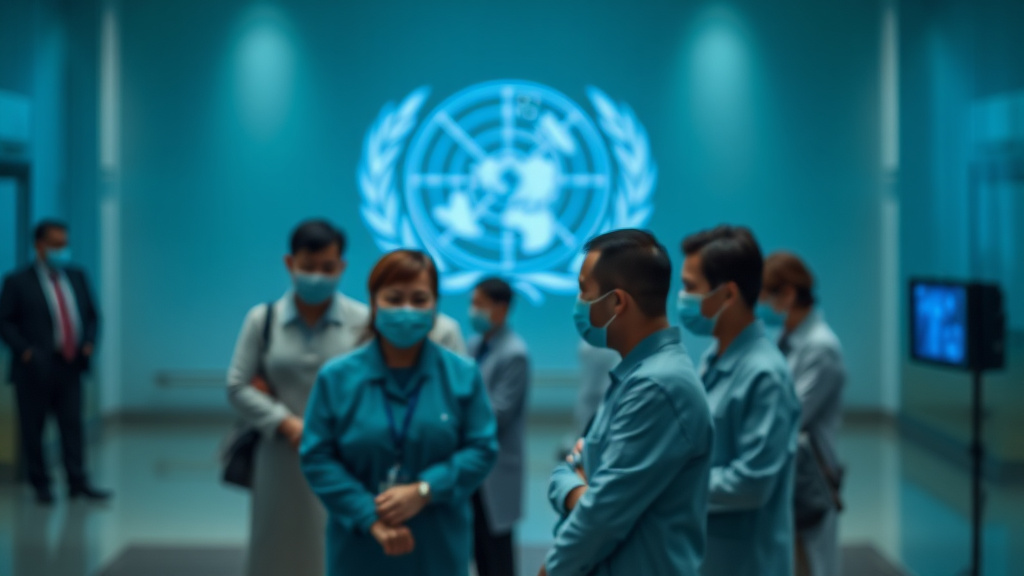
In a major move to counter the rising threat of epidemic diseases globally, the World Health Organization has launched an ambitious new initiative designed to bolster international disease tracking and immediate response capacity. This extensive initiative is designed to address key deficiencies in outbreak readiness, upgrade rapid identification systems, and enhance cooperation between nations. By bringing together resources and knowledge, the WHO seeks to avert emerging outbreaks from escalating into severe worldwide health crises, possibly protecting millions of lives.
International Response Strategy
The WHO’s latest program creates a coordinated framework that empowers nations to work collectively in addressing communicable disease challenges. By developing standardized protocols and communication channels, countries can exchange vital epidemiological data in immediate fashion, enabling quicker detection of emerging pathogens. This coordinated method strengthens the international health protection infrastructure, confirming that assets are allocated effectively and purposefully to control spread before they spread across borders and continents.
Central to this strategy is the creation of regional coordination hubs equipped with cutting-edge diagnostic equipment and skilled staff. These hubs will serve as first-line defense systems, offering immediate technical support and expert advice to impacted countries. The initiative prioritizes capacity building in resource-limited areas, where resources are frequently constrained, guaranteeing equitable access to surveillance tools and emergency response capabilities. Through this comprehensive approach, the WHO aims to build a seamlessly connected global health system.
The effort also focuses on funding for state-of-the-art technology plus artificial intelligence for outbreak tracking. Algorithmic models will analyze vast datasets to forecast disease spread patterns and identify potential hotspots before cases emerge. This preventive methodology constitutes a paradigm shift from responsive actions to preventive strategies. Advanced tracking systems will monitor viral changes and disease transmission routes, empowering public health officials to adjust interventions quickly and efficiently.
Moreover, the WHO dedicates itself to building stronger relationships with commercial partners, research universities, and civil society groups. This cooperative network promotes creative solutions in vaccine research, disease detection, and therapeutic treatments. By breaking down silos between public health authorities and scientific organizations, the effort accelerates scientific breakthroughs and enables swift rollout of solutions. Clear and honest information exchange strengthens community confidence and enhances public participation in prevention initiatives.
Implementation and Key Components
The WHO’s effort operates through a multi-layered framework integrating digital advancement, cross-border partnerships, and budget management. This strategic approach combines established observation frameworks with advanced digital solutions, facilitating instantaneous data transmission internationally. By creating explicit guidelines and funding mechanisms, the organization guarantees participating nations can deploy comprehensive disease monitoring systems. The initiative focuses on vulnerable regions, enhancing medical systems where epidemics create the most danger to international stability.
Early Detection Methods
Advanced surveillance technology forms the backbone of the WHO’s rapid identification infrastructure. The initiative utilizes artificial intelligence and machine learning models to examine health data patterns, identifying emerging outbreaks before they propagate widely. Testing facilities across participating nations obtain upgraded equipment and instruction to enhance testing precision. This interconnected system facilitates swift detection of new infectious agents, allowing public health officials to establish control strategies swiftly and effectively.
The initial detection framework also emphasizes grassroots involvement and regional notification systems. Healthcare workers in distant regions receive training to detect unusual disease patterns and communicate results through protected online platforms. The WHO delivers real-time feedback and recommendations to field staff, building a responsive ecosystem. This grassroots approach confirms outbreaks are discovered at their point of emergence, maximizing intervention effectiveness and minimizing spread risk.
Quick Response Units
Expert rapid deployment teams are prepared to respond within 48 hours of outbreak verification. These cross-functional teams comprise epidemiologists, diagnostic specialists, logisticians, and public information specialists. Teams undergo rigorous training in outbreak assessment, specimen collection, and applied epidemiology. The WHO maintains advance equipment stockpiles and supplies in key locations worldwide, ensuring teams can rapidly respond to evolving health threats with minimal delays.
Response teams collaborate closely with national health authorities and local communities, being mindful of cultural differences while putting in place essential control strategies. Training emphasizes clear information sharing to maintain trust during critical situations. The initiative includes psychological assistance for team members operating in high-risk environments. Regular review and post-operation reviews improve protocols, making certain each response produces important insights for upcoming deployments.
- Send epidemiologists in under two days globally
- Execute field investigations and sample collection operations
- Work with local health authorities and governments
- Deliver immediate data analysis and disease surveillance
- Introduce containment protocols and preventive measures
Anticipated Results and Future Impact
The WHO’s initiative is projected to yield significant results within the next five years. Enhanced surveillance systems will enable faster discovery of emerging pathogens, substantially decreasing response times. Countries implementing these protocols can expect improved disease tracking capabilities and better-equipped laboratories. The initiative seeks to create consistent reporting procedures across all countries involved, establishing a cohesive global network. Early projections suggest that rapid intervention protocols could avert up to 80% of anticipated outbreaks from escalating to pandemic levels, fundamentally reshaping how the world addresses threats from infectious diseases.
Looking ahead, this initiative seeks to set a novel framework for global health partnership and preparedness. By channeling funds into infrastructure, training, and technology transfer, the WHO anticipates a future where disease outbreaks are quickly contained at their source. Member nations will benefit from pooled research information, coordinated vaccine development strategies, and enhanced medical systems. The long-term impact extends beyond limiting disease transmission to creating adaptable health frameworks capable of resisting future health threats, ultimately creating a safer world for all populations and generations to come.
